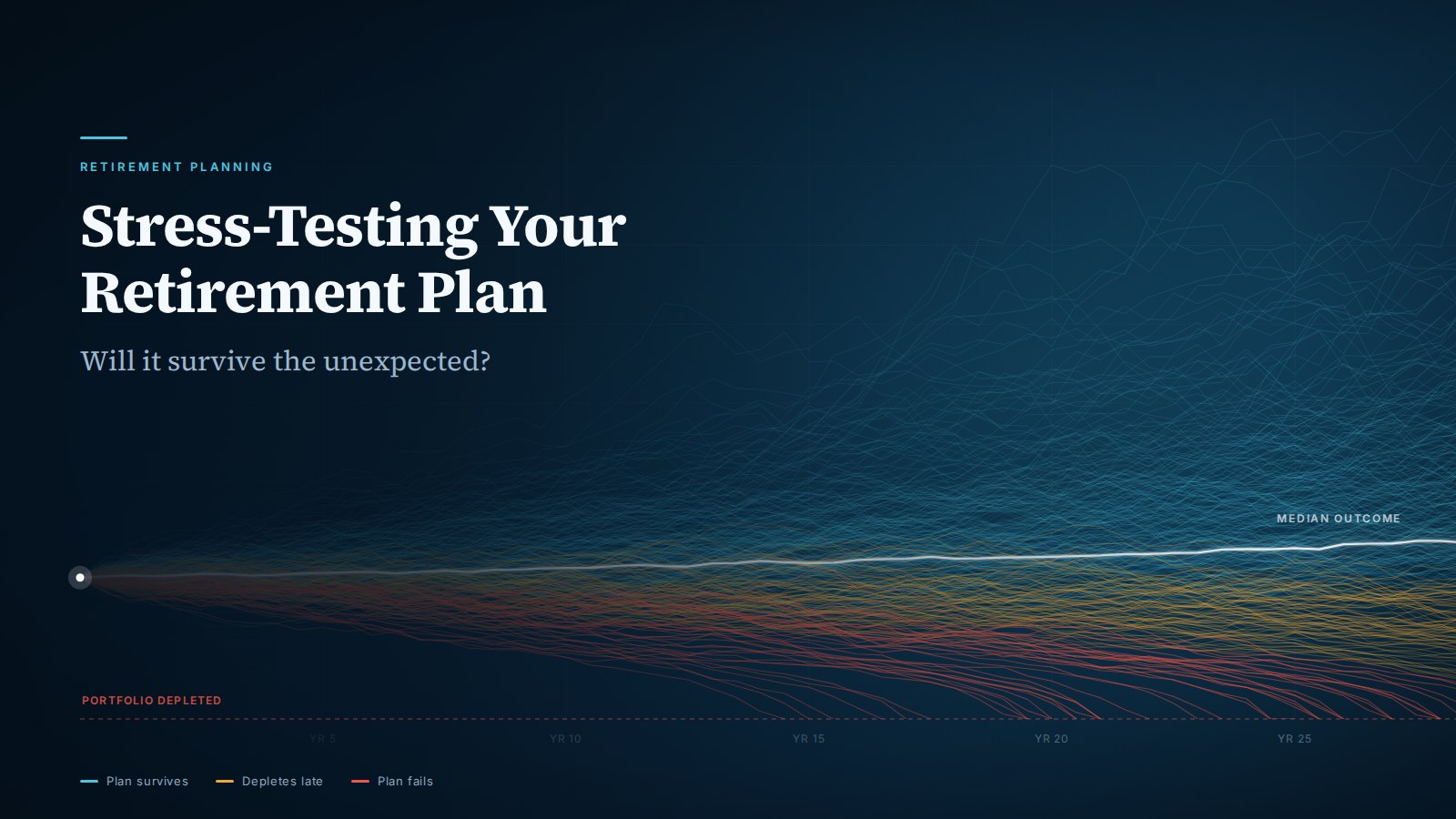
Retirement planning isn’t just about projecting a smooth path forward — it’s about preparing for the bumps, detours, and storms that real life brings. A solid plan on paper can crumble under real-world pressures like market crashes, surging inflation, or outliving your savings. That’s where stress-testing comes in.
Stress-testing means running your retirement numbers through multiple “what-if” scenarios to see how your plan holds up. Professional tools often use Monte Carlo simulations — running thousands of possible market, inflation, and lifespan outcomes — to give you a success probability rather than a single hopeful projection.
Why Stress-Testing Matters in 2026 and Beyond
Today’s retirees face longer lifespans, evolving healthcare costs, and economic uncertainty. Even a well-funded portfolio can face challenges from sequence-of-returns risk (poor markets early in retirement), persistent inflation, or unexpected expenses. Stress-testing helps you identify weaknesses before they become problems and build greater confidence in your strategy.
Key Scenarios Every Retirement Plan Should Be Tested Against
1. Market Downturns and Sequence Risk What happens if the market drops 30–40% in the first few years of retirement? Stress-testing reveals whether you’d need to sell investments at a loss to cover expenses. Mitigation ideas: Maintain 2–3 years of cash or safe assets (Bucket 1 strategy), consider annuities for guaranteed income floors, or adopt flexible spending rules that cut back in down years.
2. High Inflation or Prolonged Inflation Even moderate inflation (3–4%) can double your living expenses over 20–25 years. Healthcare and housing often rise faster. Test: Increase your annual spending need by 3–4% each year in projections and see if your portfolio survives. Mitigation: Include inflation-protected investments (TIPS, certain annuities with riders, dividend-growth assets) and review Social Security claiming strategies.
3. Longevity Risk Planning for age 85 is common — but what if you (or your spouse) live to 95 or 100? Test: Extend your plan to age 100+ and factor in higher late-life healthcare needs. Mitigation: Annuities with lifetime income, long-term care riders, or life insurance with chronic illness benefits can help transfer some of this risk.
4. Healthcare and Long-Term Care Costs A healthy 65-year-old couple today may need $300,000+ for out-of-pocket medical expenses — and that doesn’t include extended care. Test: Add large one-time or ongoing healthcare shocks to your plan. Mitigation: Explore hybrid life insurance/long-term care policies or dedicated LTC solutions.
5. Tax Changes, Policy Shifts, or Personal Events Higher future tax rates, RMD surprises, or changes in Social Security/Medicare rules. Also test divorce, early death of a spouse, or family caregiving needs.
Common Pitfalls
- Assuming average returns every year (markets don’t work that way).
- Ignoring spouse survivorship needs.
- Using outdated inflation or lifespan assumptions.
- Overlooking fees, taxes, and withdrawal order.
Action Steps for Greater Peace of Mind
- Gather your current numbers: savings, income sources, expenses, and debts.
- Run basic stress scenarios yourself or with a professional.
- Identify gaps — then explore solutions like guaranteed income products or portfolio adjustments.
- Document your plan and revisit it regularly.
A stress-tested retirement plan doesn’t eliminate uncertainty — it equips you to handle it with confidence. Many of our clients sleep better knowing their essential expenses are covered even in tough scenarios, thanks to a balanced mix of growth assets, guaranteed income (like annuities), and protective insurance coverage.
Next Step: Schedule a complimentary stress-test review with our team. We’ll run your personalized scenarios, review existing life insurance and annuity contracts for opportunities, and help strengthen any weak spots — at no cost to you.